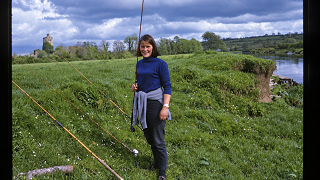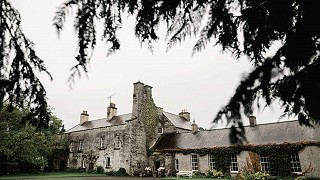
In Loving Memory of Jeremy Green (1934–2025)

Jeremy Green: An Account of His Life by Justin Green
Jeremy “Jer” Green lived a life rooted in family, community, and the outdoors. He was a farmer and gardener, a sportsman and host, practical and resourceful, quietly generous, and - right to the end - curious, mischievous, and full of good humour. His life spanned continents and upheaval, yet it was defined by steadiness: by work done without fuss, care given without complaint, and a deep love of family and home.
Early years: Malaya, wartime flight, and England
Jeremy was born on August 28th, 1934, in Bangsar Hospital in Kuala Lumpur, Malaya (as it was then). His father managed rubber estates, and Jeremy’s earliest childhood memories were shaped by estate life: the jungle close by, a household that included local staff, and a freedom that encouraged both independence and mischief. He was cared for by a Chinese amah (nanny) who taught him Malay, which he later joked he spoke more fluently than English. He also picked up some Chinese, and liked to claim that much of it was probably swear words.
Those years produced family stories that he never tired of retelling: chasing ducks with a stick, only to look back and find his father chasing him the same way; watching a vet take the dog’s temperature and then attempting the procedure on the cat with a rusty nail; and one infamous experiment in which he decided to test whether cats could swim by flushing the family cat down the toilet - an escapade that ended with the cat shooting back up, launching itself out an upstairs window, and disappearing into the jungle, thoroughly offended. Jeremy loved recounting these tales, and he delighted in passing them on to his grandchildren.
Even as a small boy he was surrounded by people who made magic for children. He remembered a birthday party where the children “fished” in a well using a bamboo rod and hook, only for presents to appear - one for each child - when they reeled in their lines. The secret, he later explained with admiration, was that his father was down the well attaching the gifts.
He attended boarding school in the Cameron Highlands, enjoying the cooler climate. Then the Second World War reached Malaya. As the Japanese advanced, his family and a group of Irish friends escaped on a boat, carrying only what they could manage. Jeremy carried his mother’s typewriter- an item that later helped her find work and support the family.
The journey took them to Durban, South Africa, where they lived as a large group - several mothers and many children - sharing a rented house near Wynberg. Jeremy quickly acquired a South African accent. During the voyage, they picked up a lifeboat of Italians who had been torpedoed; he remembered them with warmth and recalled how they made keepsakes for him and his sister by hammering pennies flat and engraving names and the ship’s name.
Eventually the family travelled on to England, renting a house in Woking, Surrey. Jeremy remembered air-raid sirens. He also recalled watching a German fighter and a British Spitfire dogfight overhead, and ran inside to fetch a catapult and pebbles in an earnest attempt to contribute, only to break someone’s window and promptly vanished from view.
He went to a prep school near Maidenhead and then to Harrow School. One particular memory stayed vivid: playing cricket when a V2 “doodlebug” flew over, the engine cutting out, the master ordering everyone into the press-up position, and then the explosion nearby in a marmalade factory - followed by a strong smell of marmalade he said he could still remember vividly.
After the war, the family spent time in South Wales at Whitland Abbey, a large house and farm inherited by his mother’s brother. It was there that Jeremy’s love of land and countryside deepened and became permanent.
Ireland and Ballyvolane
In 1949, his parents Squirrel and Joyce retired from Malaya to Whitland. A long-held family promise eventually drew them to Ireland: when Jeremy’s father proposed, Jeremy’s mother insisted she would marry him on the condition that they would retire to Ireland. His father agreed enthusiastically. In 1953 he bought Ballyvolane, which became the centre of Jeremy’s adult life.
Jeremy did his National Service in the army after leaving school and then spent a very happy few years at the Royal Agricultural College, Cirencester after which time he returned to Ballyvolane to farm in the late 1950s. The farming routine was demanding and unrelenting. He milked cows twice a day, seven days a week, in a milking parlour without hot water- a particularly hard challenge through winter. He loved machinery, and especially his old Massey Ferguson 35 tractor which you had to constantly steer to the right to go straight.
In those early years he also kept sheep and pigs. One family story recalls him giving his wife, Merrie, a pig for her birthday. She named it Samantha. On another occasion, he bought a new ram in Fermoy and brought it home in the back of his Mini estate. One of his neighbours mischievously phoned him to say that he had spotted him and Merrie driving past in their new car.
When his mother-in-law (known in the family as Narsie) was recovering at Ballyvolane from a painful hip replacement, she fell out of bed one night and began shouting for help. Jeremy, hearing the commotion, leapt up and ran straight to the farmyard, convinced a cow was calving.
He worked closely with neighbours and friends and shared machinery when it made sense. There were long days of forage harvesting with others, and stories of Jeremy’s playful side emerging even in hard work: speeding up at just the wrong moment so sugar beet flew where it shouldn’t, causing colourful language from a companion in a cab-less tractor - while Jeremy laughed, and someone else inevitably got blamed.
Family and the outdoors
He married his beloved Merrie Benson in 1965 and Jeremy and Merrie lived at Tim’s House on the estate in the early years until Squirrel passed away in 1974. They then moved into Ballyvolane House. He was, above all, a family man. He and Merrie raised three sons, Justin, Sebastian and Adam and created a household where work, sport, and the outdoors were woven into everyday life. As boys, his sons spent long stretches shooting with him during school holidays - sometimes six or seven days a week - and fishing in the summers - he encouraged them to learn responsibility alongside enjoyment. One neighbour once rang, concerned, to report that three young boys (aged 12, 10 and 8) had been seen walking home with guns after a day’s shooting; Jeremy calmly replied that yes, he knew - he had dropped them off.
He was passionate about shooting and was widely regarded as an exceptional shot, always moving his feet. Even in his mid-eighties, he brought down a high bird that everyone else had missed. Later, when he felt age had reduced his safety, he made the decision to stop shooting.
Dogs were part of that world too. He kept a pack - mainly spaniels - and there were always stories about them. One dog in particular, Putty, a scruffy terrier, became famous for retrieving so naturally that invitations were sometimes extended to Putty rather than Jeremy, though Jeremy was usually allowed to come along with a gun.
Gardens and hospitality
If farming was Jeremy’s work, gardening was his joy. The gardens at Ballyvolane - especially the walled garden - were a lifelong passion. He and Merrie restored ponds below the house and undertook extensive planting. Jeremy had a special love for trees, a depth of knowledge that impressed anyone who worked alongside him, and a generosity in sharing what he knew. Well into his eighties he was still confidently cutting and splitting logs with a chainsaw.
In the late 1980s, Jeremy faced a difficult period. He sold much of the farm at a time when agriculture was increasingly hard to sustain. He also contracted brucellosis, and the economics of the farm no longer added up. Out of that challenging moment, he and Merrie began taking in paying guests on an ad hoc basis - and discovered a gift for hospitality.
Merrie became known for her cooking; Jeremy and Merrie became consummate hosts: Jeremy was chief waiter, butler, and head of maintenance. He kept the bills and accounts, while Merrie insisted she “couldn’t add up.” When Jeremy was away, Merrie sometimes asked guests to do their own bills - an unusual system, but one that mostly worked.
The guesthouse side of Ballyvolane flourished, and Jeremy became deeply involved with Hidden Ireland, serving as Chairman for many years. Most of the guests were angling enthusiasts who came to salmon fish on the river Blackwater. Many became life-long friends. Hospitality suited him: he liked people, he listened well, he enjoyed making others comfortable, and he took pride in doing things properly.
One story from those early paying-guest days became legend. Jeremy had gone shooting and enjoyed a few drinks. He returned late, slightly worse for wear and undressed quietly in the bathroom so as not to wake Merrie, and slipped gently into bed - only to be met by a surprised voice saying, “Excusez-moi.” Merrie had forgotten to mention that a French couple had booked in while he was out, and Jeremy had climbed into their bed by mistake. The French couple were very good about it.
Later years: four generations at home and a steady handover
In 2003, Jeremy’s son Justin moved back to Ballyvolane, and in 2004 took over following the death of Justin’s mother, Merrie. In the years that followed, Jeremy was a steady, supportive presence and a colossal practical help. He carried an encyclopaedic knowledge of the house and its eccentric systems - plumbing, electrics, machinery, and maintenance - and he passed that knowledge on patiently over time. He provided a masterclass of how to hand over from one generation to the next.
In the early years after the family returned, Jeremy often served breakfast to guests before spending the day in the gardens - where he was happiest. He always claimed he never had enough time for them, but in those years he gave himself to them fully, and the results were obvious.
Ballyvolane during that period became something rare: a home with four generations living side by side. Justin, Jenny and their young children were there; Jeremy was there; Justin’s grandparents (known as Narse and Grumps) lived nearby on the property; and Jeremy’s mother, Joyce - known as Granny Joyce or Gaga - was also present. It was a small community, and it worked. It gave the children the uncommon gift of growing up with a grandfather and great-grandparents close at hand.
Jeremy was also extraordinarily fortunate in love later in life. He found Philippa, and together they shared seventeen remarkably happy years until Philippa passed away in March 2025. They made a life full of companionship, laughter, dogs, friends, and the everyday joys. Those years brought him enormous happiness, and he spoke of her with real pride and affection.
He enjoyed simple pleasures: watching rugby, often with a gin and tonic; keeping bird feeders outside his window; and observing the small life of the garden. Red squirrels would also feed from hiss feeders every day.
He was proud of his Irish heritage and identity. Having lived in Ireland for most of his life, he felt Irish, and he took particular pleasure in seeing Ireland beat England in rugby.
Care, loyalty, and the way he lived
Jeremy cared for people throughout his life. He cared for Merrie during her illness. He cared for elderly relatives. In later years he cared for his partner, Philippa, through her final months. He did it quietly and willingly, without resentment and without drama - simply because it was what needed doing.
He remained, to the end, the same man people had always known: kind, funny, modest, resilient, patient, and deeply attentive to others. A farmer and gardener at heart, a sportsman, a host, and a practical problem-solver. He loved family life, loved good company, and loved Ballyvolane - its land, its gardens, and the community around it.
His life left marks you can still see: in the trees he planted, the gardens he shaped, the systems he understood and maintained, and the stories that continue to be told - often with laughter - whenever family and friends gather.